 how-to
How to Choose a Motocross Helmet: Safety Guide
Table of Contents
- How to Choose a Motocross Helmet: Start with Safety Certifications
- How to Measure for a Motocross Helmet Fit
- Motocross Helmet Safety Ratings: What They Mean
- Motocross Helmet Safety Features That Protect You
- When to Replace a Dirt Bike Helmet
- Helmet Compatibility with Goggles and Riding Gear
- Common Mistakes When Choosing a Motocross Helmet
- Frequently Asked Questions
Last Updated: October 10, 2026
How to Choose a Motocross Helmet: Start with Safety Certifications
When you choose motocross helmet, it isn't just about finding something that fits your head. The real question is whether it will actually protect you when you need it most. That's where safety certifications come in. They're the foundation of every helmet worth wearing.
Two major certification standards dominate the market: DOT and ECE 22.06. Both set rigorous testing requirements, but they measure different things. Understanding what each one means helps you make an informed choice about which helmet will give you the protection you're counting on.
Understanding DOT Standards
The DOT standard is set by the National Highway Traffic Safety Administration. It focuses on impact absorption and penetration resistance. A DOT-certified helmet has passed tests that measure how well it protects your head during a crash.
Here's what DOT testing actually checks:
- Impact absorption across multiple impact zones
- Retention system strength so the helmet stays on
- Penetration resistance against sharp objects
- Visibility and peripheral vision requirements
If you see a DOT sticker inside a helmet, it means the manufacturer tested that specific model and it passed. DOT certification is mandatory for street riding in most places, and many motocross riders choose DOT helmets for added peace of mind.
Understanding ECE 22.06 Certification
ECE 22.06 is the European standard, but it's gaining ground with serious motocross riders everywhere. The testing is more comprehensive than DOT in some ways. ECE 22.06 includes rotational-impact testing, which DOT does not.
ECE certification requires helmets to pass tests for:
- Multiple impact zones with varying drop heights
- Rotational force reduction during oblique impacts
- Chin bar strength and stability
- Visor performance and retention
Many premium motocross helmets carry both certifications. That dual certification means the helmet meets the highest protection standards from both testing regimes. It's worth looking for when you're comparing options.
How to Measure for a Motocross Helmet Fit
A helmet that doesn't fit is a helmet that won't protect you. Even the safest design fails if it shifts during a crash or sits too loose on your head. Proper fit starts with an accurate measurement.
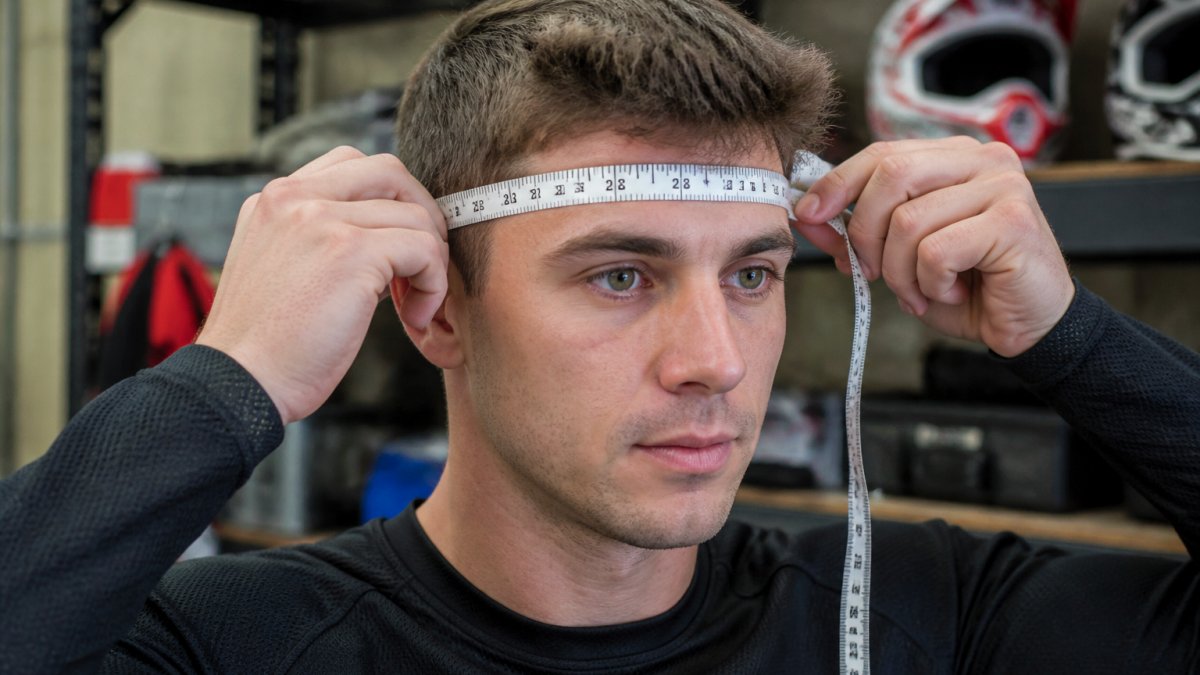
Measuring Your Head Circumference
Start with a soft measuring tape. Wrap it around your head at the widest point, positioning the tape above your eyebrows and just above your ears. Keep the tape snug but not tight. Write down the measurement in inches.
Most helmet manufacturers provide a size chart that matches circumference measurements to helmet sizes. A 22-inch head typically fits a small, while a 23-24 inch head usually needs a medium. Check the specific brand's chart because sizing varies between manufacturers.
Measure twice to confirm. If you're between sizes, try both on before deciding. Some heads are rounder, others more oval. The shape matters as much as the circumference.
The 2-2-2 Fit Rule for Helmet Stability
Once you have a helmet on, apply the 2-2-2 rule. This simple test tells you if the fit is right:
- Two fingers rule: You should be able to fit two fingers between your cheek and the cheek pad when you clench your jaw
- Two-finger forehead rule: Two fingers should fit between your forehead and the helmet's inner liner
- Two-finger wiggle rule: The helmet should move no more than two finger-widths when you gently push it side to side
If the helmet moves more than that, it's too loose. If you can't fit two fingers in any of these spots, it's too tight. A proper fit means the helmet moves with your head, not independently.
Checking for Pressure Points and Movement
Wear the helmet for 15-20 minutes. Pressure points that feel uncomfortable now will become painful during a ride. Pay attention to the sides of your head, the top, and around your chin.
A small amount of pressure is normal. The foam will compress slightly as you wear it. But sharp pressure points or areas that feel like they're cutting off circulation mean the helmet isn't right for your head shape.
Shake your head side to side and front to back while wearing the helmet. It should move with you, not lag behind or slip forward. If it does either, keep trying different sizes or brands.
Motocross Helmet Safety Ratings: What They Mean
Safety ratings tell you how well a helmet performs in testing. But the numbers and letters can be confusing if you don't know what you're looking at.
Impact Absorption and Liner Technology
The inner liner is what actually protects your brain. Most modern motocross helmets use multi-density EPS foam. That means different foam densities in different areas of the helmet.
The denser foam sits where impacts are most likely. Softer foam goes where comfort matters more. This design absorbs energy more efficiently than single-density foam. It spreads the force of impact across a larger area instead of concentrating it in one spot.
Some premium helmets add additional materials like Koroyd or similar honeycomb structures. These reduce rotational forces during impacts. The Alpinestars Supertech M10 Helmet uses a four-density EPS liner combined with MIPS technology to handle both linear and rotational impacts. This helmet represents the upper end of protection technology available today.

Rotational-Impact Protection Systems
Rotational force is what happens when your head twists during an impact. Your brain can suffer injury from that twisting motion even if the linear impact force is absorbed. Standard DOT testing doesn't measure rotational protection.
MIPS (Multi-directional Impact Protection System) is the most common rotational-protection technology. It uses a low-friction layer inside the helmet that allows a small amount of movement. When you hit something at an angle, this layer reduces the rotational force transmitted to your head.
Other brands use similar systems with different names. The THOR Reflex Sport Carbon Helmet includes MIPS Integra TX technology for this reason. The VX-Pro4 Helmet uses a polished inner EPS liner with a special low-friction coating to reduce rotational acceleration from oblique impacts.
Motocross Helmet Safety Features That Protect You
Beyond certifications and fit, specific design features make a real difference in how well a helmet protects you.
Supertech M10 Helmet - Flood - MIPS® →
Shell Construction and Materials
The outer shell is your first line of defense. Stronger materials mean better penetration resistance and more efficient energy transfer. Carbon fiber shells are lighter and stronger than fiberglass, but they cost more.
The Alpinestars Supertech M10 uses a three-layer system with 3K carbon, uni-directional carbon composite, and aramid fiber. This combination provides superior energy dissipation and penetration protection. The SM3 Helmet uses a thermo-injected thermoplastic shell with composite fiber reinforcement for maximum impact protection at a lower price point.
Shell shape matters too. A smooth, rounded shell deflects impacts rather than absorbing them head-on. Avoid helmets with external channels or protrusions that could catch during a crash.
Ventilation and Weight Considerations
A helmet you'll actually wear is better than one you avoid because it's uncomfortable. Good ventilation keeps you cool and focused. More intake and exhaust ports mean better airflow.
The Alpinestars Supertech M10 features 28 individual ports for maximum cooling. The SM3 has ten inlets and seven exhaust ports. More ventilation also means slightly less structural material, which reduces weight.
Weight matters during long rides. A lighter helmet reduces neck fatigue and lets you ride longer without discomfort. Most quality motocross helmets weigh between 3 and 4 pounds. Premium carbon-shell helmets may weigh less, while budget options sometimes weigh more.
When to Replace a Dirt Bike Helmet
A helmet has a limited lifespan. Even if it looks fine, the foam degrades over time. Most manufacturers recommend replacing your helmet every 3-5 years, regardless of whether you've crashed in it.
Any significant impact means replacement time. You might not see visible damage, but the foam has been compressed. That compressed foam won't absorb the next impact as effectively.
Environmental factors matter too. Sunlight, heat, and humidity break down helmet materials. Store your helmet in a cool, dry place away from direct sunlight. Avoid leaving it in a hot car or garage.
Check the foam regularly. If it feels soft or spongy in areas where it should be firm, the helmet is degrading. That's a sign it's time for a replacement, even if the outer shell looks perfect.
Helmet Compatibility with Goggles and Riding Gear
Your helmet needs to work with the rest of your gear. Goggles that don't fit properly with your helmet create gaps where dirt and debris can get in. Neck braces and other protective equipment need to integrate smoothly.
Test your goggles with the helmet before you ride. The goggle strap should sit comfortably against the helmet. The goggles should seal against your face without gaps.
Neck braces need clearance at the chin bar. A helmet with a chin bar that's too long or positioned too low can interfere with neck brace function. Check compatibility before buying.
The VX-Pro4 Helmet includes an Air-Through top-rear-duct center brace that functions as a secure goggle-strap locator. This design ensures your goggles stay positioned correctly throughout your ride.

Common Mistakes When Choosing a Motocross Helmet
Most riders make at least one of these mistakes when they choose motocross helmet. Knowing what to avoid saves time and money.
Buying based on looks alone is the biggest mistake. A helmet that looks great but doesn't fit your head shape will never feel right.
Ignoring certifications is another common error. A cheap helmet without DOT or ECE certification hasn't passed rigorous safety testing.
Assuming your size is the same across brands leads to frustration. Helmet sizing varies significantly between manufacturers. A medium in one brand might be a large in another.
Neglecting to check your fit regularly creates problems. Helmet liners compress with use. A helmet that fit perfectly when new might be loose after a season of riding.
At Monarch Sandbox, we understand that choosing the right motocross helmet is about balancing protection, comfort, and fit. We also carry the THOR Reflex Sport Carbon Helmet for riders seeking a lighter option with MIPS Integra TX technology, and the VX-Pro4 Helmet with its specialized ventilation system and emergency release features.

| Helmet Model | Key Technology | Best For | Price |
|---|---|---|---|
| Alpinestars Supertech M10 | MIPS + 4-density EPS + 28 ports | Maximum protection and cooling | $839.95 |
| THOR Reflex Sport Carbon | MIPS Integra TX + Koroyd | Lightweight performance | $499.95 |
| VX-Pro4 | Low-friction liner + goggle locator | Versatile off-road riding | $699.95 |
| SM3 | Multi-density EPS + emergency release | Budget protection | $229.95 |
Choosing a motocross helmet means committing to your safety.
Frequently Asked Questions
What is the 2-2-2 rule for motorcycle helmets?
The 2-2-2 rule checks helmet fit: place two fingers between your forehead and the helmet liner, two fingers between each cheek pad and your cheek, and two fingers between your chin and the chin bar. If the helmet moves more than two finger-widths in any direction when you move your head, it's too loose. A snug fit prevents dangerous movement during impact and ensures the helmet stays in place during a crash.
How should a motocross helmet fit properly?
A proper-fitting motocross helmet should feel snug around your head without causing pressure points. When fastened, the helmet should not shift forward, backward, or side-to-side when you move your head. The cheek pads should contact your cheeks firmly but comfortably, and the chin strap should be tight enough that you can fit only one finger under it. The helmet may feel slightly tight initially but will break in as the foam liner compresses slightly with use.
When should you replace a motocross helmet?
Replace your helmet immediately after any significant impact, crash, or fall, even if there's no visible damage. The inner foam liner may be compressed internally, reducing impact protection. Additionally, replace your helmet every 3-5 years due to foam degradation from UV exposure, moisture, and normal wear. Check the manufacturer's guidelines, as some helmets have specific replacement dates printed inside. Regular inspection for cracks, dents, or loose padding also signals replacement time.
What safety features should I look for in a motocross helmet?
Look for helmets with DOT or ECE 22.06 certification, multi-density EPS foam liners for impact absorption, and rotational-impact protection systems like MIPS® that reduce rotational forces to the brain. Check for shell construction using carbon fiber or fiberglass composites, emergency release systems for safe removal, and proper ventilation with multiple intake and exhaust ports. Consider helmets with removable cheek pads, adjustable peaks for compatibility with goggles, and lightweight materials that reduce neck strain during long rides.