 ultimate-guide
Essential Gear for Beginner ATV Riders: 2026 Guide
Table of Contents
- The Essential Gear for Beginner ATV Riders: A Complete Checklist
- ATV Maintenance Kit for Beginners: What to Carry and Why
- Emergency and Survival Supplies Every Beginner Should Pack
- Communication and Navigation Devices for the Trail
- Budget vs. Premium Gear: What Beginners Should Spend On
- Legal and Regulatory Requirements for Beginner ATV Riders
- ATV Safety Guidelines for Beginners: Riding Smart from Day One
- Frequently Asked Questions
Last Updated: September 29, 2026
The Essential Gear for Beginner ATV Riders: A Complete Checklist
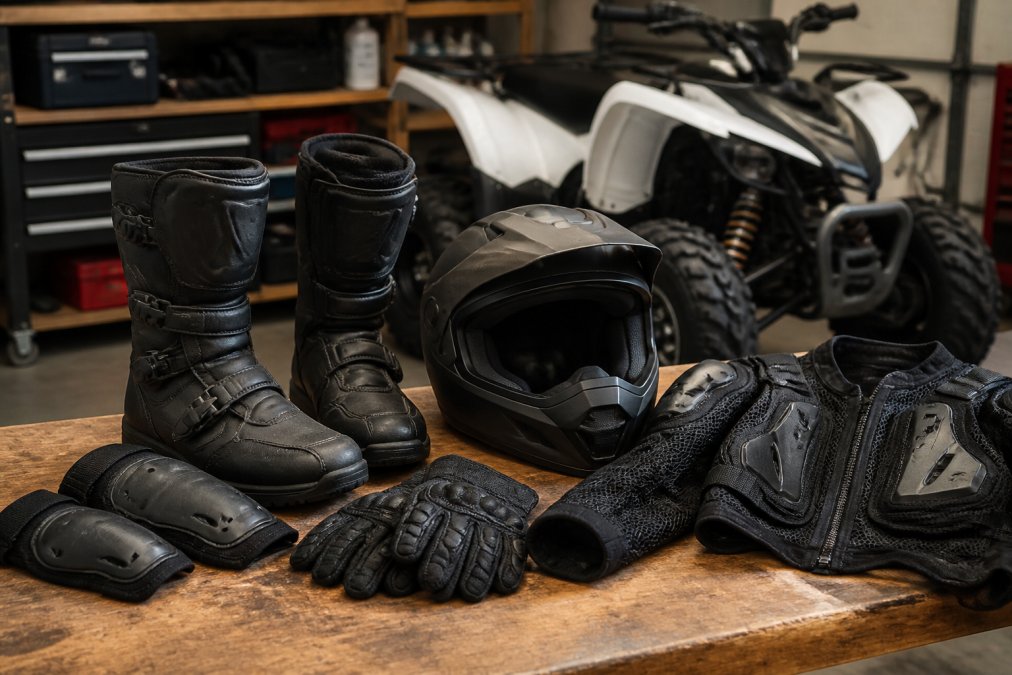
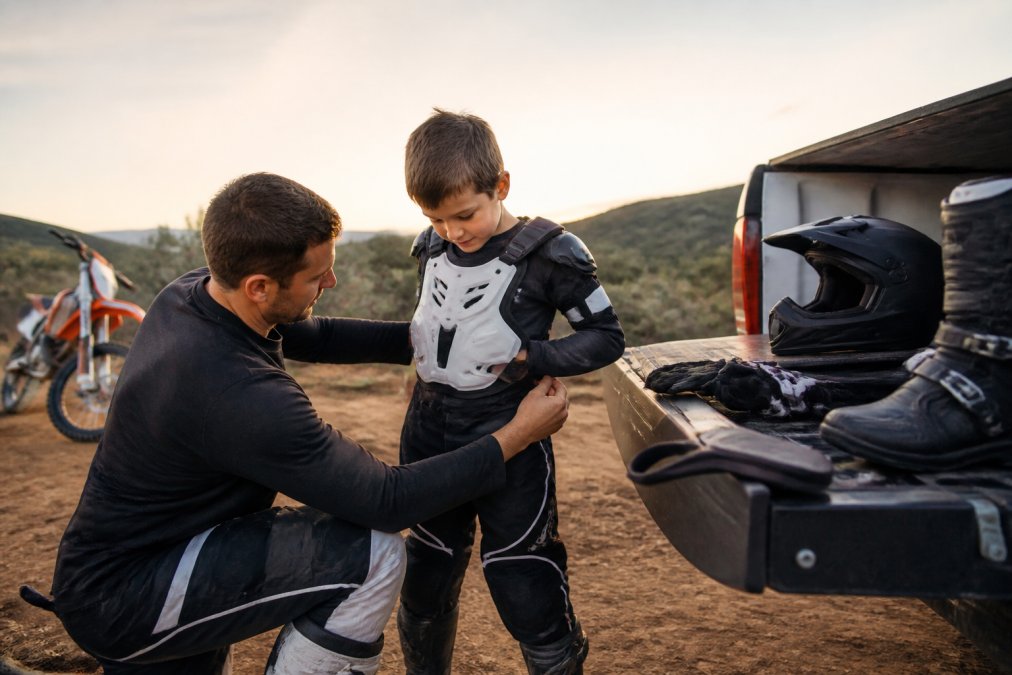
Essential gear for beginner ATV riders is the minimum protective equipment, apparel, and safety supplies needed to ride safely on trails and private land. At Monarch Sandbox, we see the same mistake every season: buying the machine first and treating gear as an afterthought. That order is backwards, gear protects you in the first thirty seconds of a crash, long before skill can help.
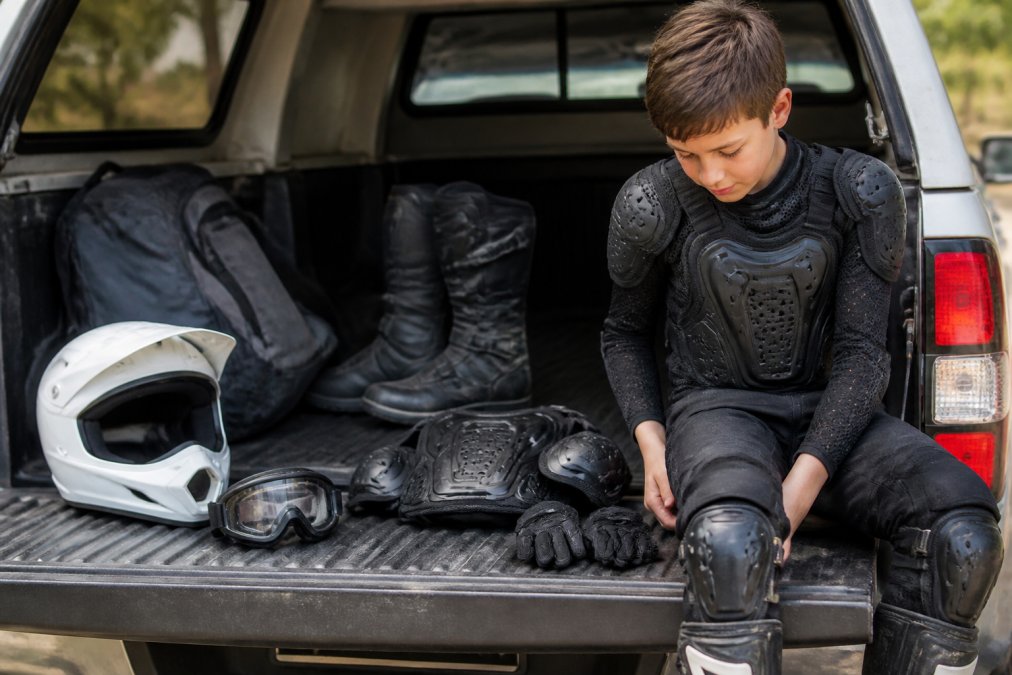
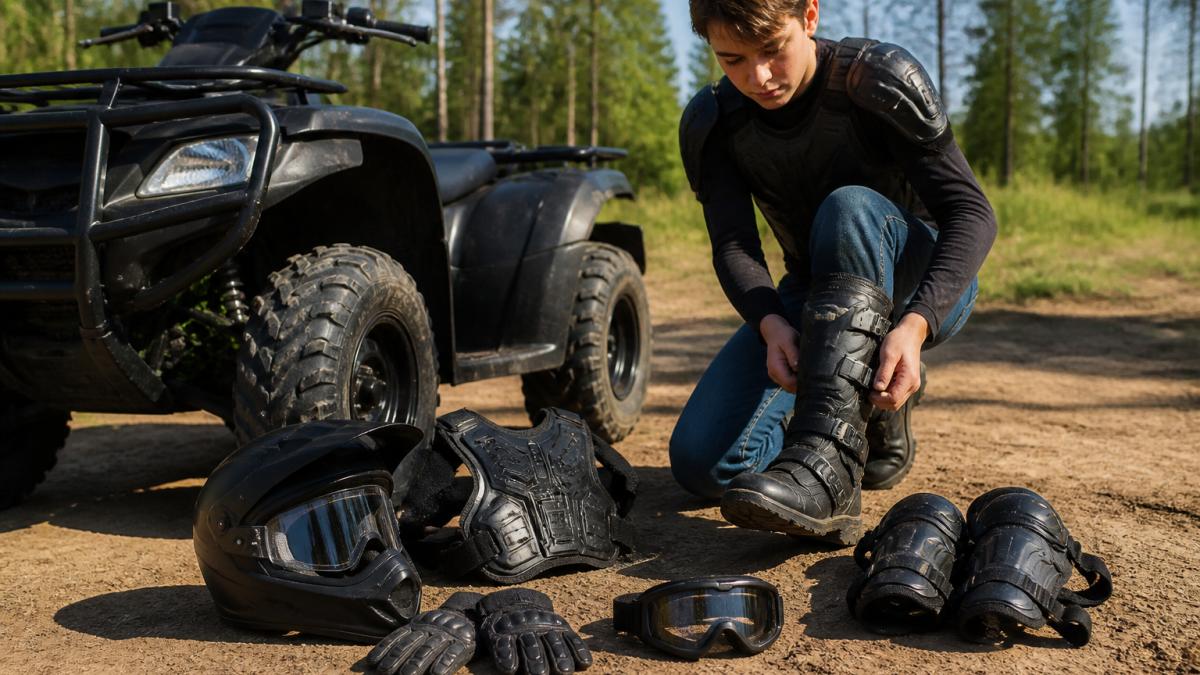
Beginner ATV rider wearing full safety gear standing by a quad bike on a dirt trail with boots and a bag nearby
Must-Have Protective Gear
A helmet is the one item you never compromise on. Look for a full-face off-road helmet with a chin bar, and confirm it carries a recognized safety certification rather than a generic "off-road" label. The U.S. Consumer Product Safety Commission standards for powersports helmets explain which certifications apply to different vehicle types, so check the label before you buy.
Clothing and Apparel for the Trail
Riding apparel should cover skin completely. A long-sleeved shirt and full-length pants protect against sun, brush, and exhaust burns. Avoid loose fabric that can snag on levers or the seat.
Footwear and Ankle Protection
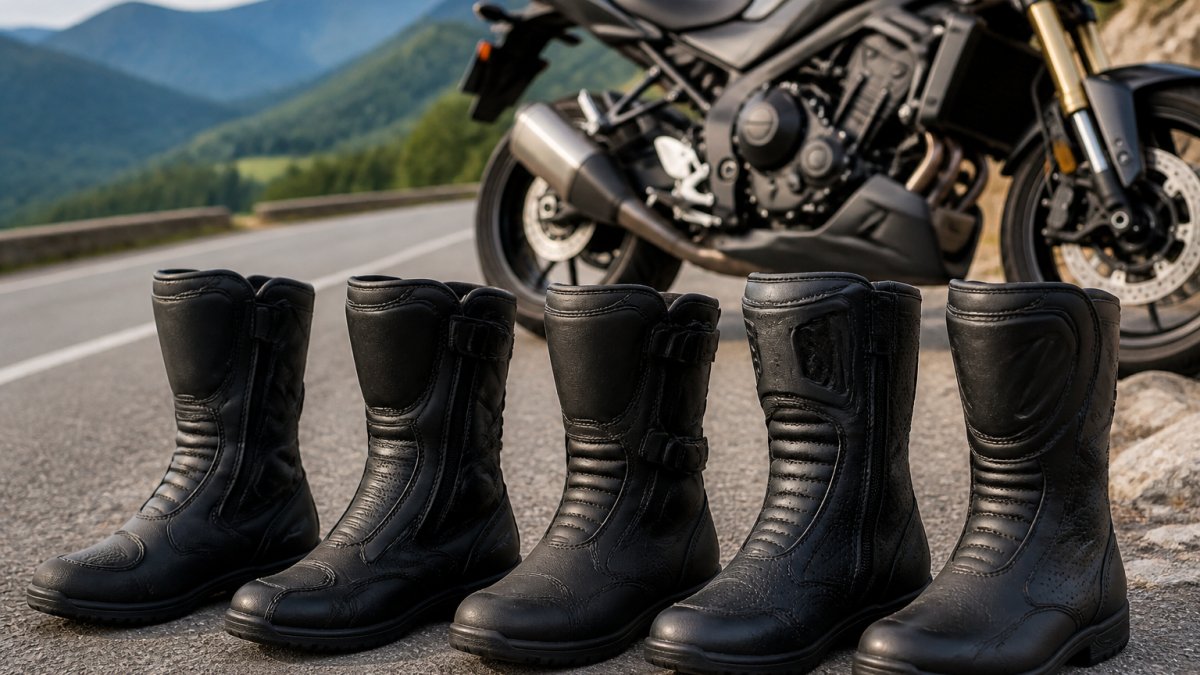
Over-the-ankle boots are non-negotiable. Sneakers, hiking boots, and work boots do not protect against the two most common ATV injuries: foot crush from a rollover and ankle twist from a bad dismount.
ATV Maintenance Kit for Beginners: What to Carry and Why
An ATV maintenance kit for beginners should cover the failures that actually strand riders: flat tires, a thrown or broken belt, loose fasteners, and a dead battery. You do not need a full shop in a bag, just the tools and spares that get you back to the trailer, plus the knowledge to use them.
Trailside Repair Essentials
Pack a tire pressure gauge, a plug kit, and a compact air pump or CO2 inflator. Carry a spare belt if your machine uses a CVT, plus a multi-tool, zip ties, safety wire, and the sockets and wrenches your ATV uses most.
Common Failure | Tool or Spare to Carry | Why It Matters |
|---|---|---|
Flat tire | Plug kit, gauge, inflator | Most common trailside stop |
Broken CVT belt | Spare belt, socket set | Machine will not move without it |
Loose fasteners | Multi-tool, zip ties, safety wire | Vibration loosens hardware over time |
Dead battery | Jump pack or jumper cables | Common on cold starts |
Stuck machine | Tow strap, winch kit | Gets you back to the trailhead |
How to Plug a Tire on the Trail
A tubeless ATV tire punctured by a thorn, nail, or sharp rock is the most common reason a beginner's ride ends early. The repair takes about ten minutes once you have done it once.
- Find the puncture. Inflate slightly and listen or use soapy water to spot the leak. Mark it with mud or a zip tie.
- Remove the object. Pull the nail or thorn straight out with pliers. If the hole is larger than a pencil eraser, a plug may not hold, limp back on low pressure instead.
- Ream the hole. Push the reaming tool in and twist to clean and roughen the inside walls. Skipping this is the most common reason plugs fail.
- Load the plug. Thread a sticky string plug through the insertion needle so it sits centered in the eye.
- Insert and twist. Push the needle in until about half the plug is inside, twist a quarter turn, and pull straight out.
- Trim and inflate. Cut the excess plug flush with the tread, then air up to the pressure on your machine's tire placard, typically low single digits to low teens PSI for off-road ATV tires, but always check your specific model.
How to Change a CVT Belt on the Trail
Most utility and sport ATVs use a continuously variable transmission (CVT) with a rubber belt that wears out and can snap under heat and load. If your engine revs but the machine will not move, or you smell burning rubber, the belt is the likely culprit. A spare belt turns a tow-truck call into a 20-minute trailside job.
- Park safely. Shut off the engine, set the parking brake, and let the CVT cover cool, it gets hot enough to burn skin.
- Remove the CVT cover. Most machines use a handful of bolts around the clutch cover. Keep them in a magnetic tray or zip-top bag so you do not lose them in the dirt.
- Note the belt routing. Take a phone photo before you pull the old belt; it wraps around the primary (engine) and secondary (driven) clutches in a specific orientation.
- Walk the belt off. Push the secondary clutch sheave apart by hand or with a wedge tool to release tension, then slide the old belt off.
- Install the new belt. Seat it on the secondary clutch first, then work it onto the primary. Make sure any directional arrows point in the direction of rotation.
- Reassemble and test. Reinstall the cover, start the engine, and idle in neutral for a minute so the belt seats. Test at low speed before rejoining the trail.
Transport and Loading Gear
Most beginner ATV problems happen before the trail: loading and unloading causes more injuries than riding for new owners. Use ramps rated for your machine's weight plus rider, and tie the ATV down at four points on the trailer.
Emergency and Survival Supplies Every Beginner Should Pack
A first aid kit belongs on every ride, not in the truck. Pack one sized for the group with gauze, tape, antiseptic, blister care, and personal medications, plus a space blanket, headlamp, and fire starter.
Communication and Navigation Devices for the Trail
Cell service disappears on most trails, so a phone alone is not a plan. Carry a GPS device or a phone with offline maps downloaded before you leave, a dedicated handheld is more reliable and works without a signal.
Budget vs. Premium Gear: What Beginners Should Spend On
Spend on protection first, comfort second, and brand names last. A beginner does not need the most expensive gear in every category, but the helmet and boots are the wrong places to save.
Category | Where to Save | Where to Spend | Why |
|---|---|---|---|
Helmet | Skip graphics packages | Certified shell, MIPS, proper fit | Protects your head every ride |
Boots | Skip race-spec models | Rigid sole, ankle support, buckles | Prevents the most common injuries |
Goggles | One good pair is enough | Sealed frame, anti-fog lens | Dust and roost protection |
Body armor | Start with a roost guard | Upgrade to full chest protector | Impact protection scales with riding |
Tools | Basic kit is fine | Spare belt, tire kit, tow strap | Gets you home |
Legal and Regulatory Requirements for Beginner ATV Riders
ATV rules vary by state, and most apply to where you ride, not just how. Common requirements include helmet use for riders under a certain age, machine registration or title, and a safety certification course for younger riders.
Supertech M10 Helmet - Flood - MIPS® →
ATV Safety Guidelines for Beginners: Riding Smart from Day One
Safety guidelines are the difference between a hobby and a hospital visit. The advice below is not a list of warnings, it is a set of habits to practice before your first trail ride and repeat every time you fire up the machine.
The Pre-Ride Inspection Checklist
Run this check every ride, not just the first one. It takes five minutes and catches the failures behind most trailside breakdowns and crashes.
- Tires. Check pressure with a gauge, not by eye or by kicking. Off-road ATV tires run at low pressures, and a tire that looks fine can be several PSI off. Look for cuts, embedded objects, and worn tread.
- Brakes. Squeeze the front lever and press the rear pedal. Both should feel firm, not spongy. Roll the machine a few feet and confirm it stops.
- Throttle. Twist and release. It should snap back to idle on its own. A sticky throttle is a serious hazard, do not ride until it is fixed.
- Fluids. Check engine oil, coolant (if liquid-cooled), and brake fluid at the sight glass or dipstick. Look under the machine for fresh drips.
- Lights and kill switch. Confirm the headlight, taillight, and brake light work, and that the engine kill switch actually shuts the machine off.
- Fasteners and chain/driveshaft. Look for loose bolts, especially on the wheels and suspension. On chain-drive machines, check chain tension and lubrication.
- Air filter. A clogged filter robs power and lets grit into the engine. Inspect it before dusty rides.
Riding Posture and Control Technique
Riding posture and control technique matter more than speed. Sit forward on climbs, shift your weight back on descents, and keep a firm but relaxed grip on the bars, using smooth throttle and progressive braking rather than sudden inputs.
Low-Speed Drills to Practice Before Your First Trail
Fifteen minutes in a flat, open area builds more control than a full day of trail miles. Practice these before you load up:
- Figure eights. Set two markers about 20 feet apart and ride slow, tight figure eights. This teaches throttle and body-weight control at low speed, where most beginner incidents happen.
- Emergency stops. Accelerate to a moderate speed, then brake firmly and progressively to a stop. Repeat until it feels automatic.
- Hill starts. On a gentle slope, hold the machine with the brake, then release smoothly into the throttle without rolling backward.
- Look-and-turn. Pick a target, look at it, and turn to it without staring at the front wheels. This builds the head-and-eye habit that keeps you out of ruts and off drop-offs.
Terrain Awareness and Trail Judgment
Terrain awareness keeps you out of trouble. Scan ahead for ruts, rocks, and drop-offs, and slow down before you need to. Visibility is your best safety tool: ride within the distance you can clearly see.
Frequently Asked Questions
What should you bring on every ATV ride?
Every ride should include a DOT-approved helmet, eye protection, gloves, over-the-ankle boots, and a riding jacket. Pack a first aid kit, hydration pack, multi-tool, tire pressure gauge, spare belt, tow strap, and a communication device. For longer rides, add emergency supplies like a flashlight, matches, and extra layers. A pre-ride inspection and a trailside repair kit help you handle common breakdowns without cutting the trip short.
What is the recommended riding gear for an ATV?
Start with a safety-certified helmet, impact-resistant goggles, and gloves. Wear a long-sleeved shirt or riding jacket made of moisture-wicking material, durable pants, and over-the-ankle boots for ankle protection. Knee guards and chest protectors add impact resistance. Choose gear that fits snugly without restricting movement. For beginners, a full-face helmet with MIPS technology, like the [Supertech M10 Helmet - Flood - MIPS®](https://www.monarchsandbox.com/products/supertech-m10-helmet-flood-mips), offers strong protection.
Do I need a DOT-approved helmet for ATV riding?
Yes. A DOT-approved helmet meets federal safety standards for impact protection. Many riders also choose helmets with MIPS technology to reduce rotational forces. Full-face helmets with a chin bar offer more coverage than open-face models, protecting your jaw and face in a fall. Always check the certification label inside the helmet before buying, and replace it after any significant impact.
What are the essential maintenance tools to carry on an ATV?
Carry a multi-tool, tire pressure gauge, spare belt, tow strap, and a basic wrench set. A small air pump and plug kit help with flat tires. Include zip ties, electrical tape, and a flashlight for quick fixes. For longer rides, add a winch and extra fuel. These items cover most trailside repairs and keep you moving. Store them in a secure, waterproof bag mounted on your ATV.
How should beginner ATV gear fit for maximum safety?
Helmets should fit snugly with no side-to-side movement, and the chin strap should be tight enough to fit two fingers under it. Gloves should be snug but allow finger movement. Boots should have minimal heel lift and secure ankle support. Knee guards and chest protectors should stay in place without pinching. Adjustable gear, like guards with ratcheting buckles, helps you dial in a custom fit as you gain experience.
What legal requirements should beginner ATV riders know?
Laws vary by state, but most require riders under 16 to wear a DOT-approved helmet and complete a safety course. Some states require registration and title for ATVs used on public lands. Riders may need a permit for certain trails. Always check your state's regulations and any local land rules before riding. Carrying proof of registration and insurance is recommended.
How do I choose between budget and premium ATV gear?
Spend more on safety-critical items like your helmet, boots, and knee guards, where impact protection matters most. Budget options work for gloves, goggles, and apparel if they meet safety standards. Look for features like MIPS and durable soles. A mid-range helmet with MIPS, such as the [Supertech M10 Helmet - Flood - MIPS®](https://www.monarchsandbox.com/products/supertech-m10-helmet-flood-mips), and quality boots will protect you better than cheap alternatives. Upgrade non-essential gear as your riding progresses.
What should be in an ATV maintenance kit for beginners?
A beginner maintenance kit should include a multi-tool, tire pressure gauge, spare belt, tow strap, and basic wrenches. Add a first aid kit, flashlight, and zip ties. For trailside repairs, pack a plug kit and small air pump. Keep a hydration pack and emergency snacks. Store everything in a waterproof bag. This kit handles common issues like flat tires, loose bolts, and minor belt problems.